Every offline workspace already knows things. Work, time, people, movement. We call that memory layer StoreGraph our ontology of how a workspace runs. AI Hub reads it, and turns it into decisions you approve, actions it runs, and results that come back.

What is AI Hub?
An AI execution platform for offline operations.
AI Hub sits on top of StoreGraph and turns what it reads into work: it assembles the agents, routes their calls through your approval rules, executes against your systems, and records what came of it. Not a fixed feature list, but a structure each site shapes around its own way of operating.

01
Decision Cards & channels
What users and HQ actually see: questions answered, reports, approvals, and alerts in one surface.
03
Industry agents
Agents that know your industry's context, assembled per site, deciding what needs doing now.
05
StoreGraph & knowledge
The shared memory layer: one ID, one set of relationships, the grounding for every call.
02
Orchestration
Breaks queries and events into tasks, directs the agents, and resolves conflicts between them.
04
Approval & workflow
Your rules for what runs on its own and what waits for a person, built into every action.
06
Integration & governance
Connects the systems you already run, and owns security, audit, and cost across all of it.
What is AI Hub?
An AI execution platform for offline operations.
AI Hub sits on top of StoreGraph and turns what it reads into work: it assembles the agents, routes their calls through your approval rules, executes against your systems, and records what came of it. Not a fixed feature list, but a structure each site shapes around its own way of operating.
We connect them
Understand it, and decide
Then build the operating system that executes



How it changes your offline workspace
POS, orders, inventory, kiosks, sensors: the site data, systems, and devices that never worked as one.
How it changes your offline workspace
We connect them

POS, orders, inventory, kiosks, sensors: the site data, systems, and devices that never worked as one.
Understand it, and decide

On that connected picture, AI reads what is happening and why, weighs what matters now, and makes the call a manager would make.
Then build the operating system that executes

Within the authority and policy you set, decisions leave the dashboard: they reach your real systems, run, and get recorded with their results.

Connect, understand, decide, execute: every loop leaves a record of what was decided, on what grounds, and what came of it. That record is not a log. It is the site's judgment, accumulating.
Where it all adds up: Decision Intelligence.
Connect, understand, decide, execute: every loop leaves a record of what was decided, on what grounds, and what came of it. That record is not a log. It is the site's judgment, accumulating.
This is what AI Hub is ultimately building: Decision Intelligence for offline operations. The longer it runs, the better each call gets, and the same intelligence extends from one site to the operation above it.
This is what AI Hub is ultimately building: Decision Intelligence for offline operations. The longer it runs, the better each call gets, and the same intelligence extends from one site to the operation above it.
How we solve it
From collecting datato solving problems
Collect data
We capture field data that was never recorded, and pull your existing systems into one stream. POS, kiosks, sensors, schedules, spreadsheets: nothing gets rebuilt, and everything gets connected.
AI Hub brings every site's decisions into one place.
It doesn't stop at showing you data,
it tells you what to do next, and gets it moving.
Results become judgment again
Execution is not the end. The result comes back and changes the next decision.

Approval
The site sets the level of automation. Show information only, go as far as a suggestion, execute after approval, or run within a set limit. Decisions that carry execution risk are approved by a person.

Execution
An approved decision goes out to the real operating systems.

Outcome
The result of execution is collected and recorded, so what worked is clear.

Relearning
The history of approvals, rejections, and edits, together with outcomes, becomes the ground for the next decision.
Results become judgment again
Execution is not the end. The result comes back and changes the next decision.
Approval
Approval
The site sets the level of automation. Show information only, go as far as a suggestion, execute after approval, or run within a set limit. Decisions that carry execution risk are approved by a person.
Execution
Outcome
Relearning

Results become judgment again
AI Hub goes beyond answering. It orchestrates how operations run. It breaks queries and events into tasks, directs the agents, and records approvals and outcomes.
AI Hub goes beyond answering. It orchestrates how operations run.
This section follows one request through the eight steps it takes inside AI Hub.
Intake
It takes in questions, button clicks, schedules, and anomaly signals.
Results become judgment again
AI Hub goes beyond answering. It orchestrates how operations run. It breaks queries and events into tasks, directs the agents, and records approvals and outcomes. What was approved, edited, or declined, and what came of it, is written down as it happens.
This section follows one request through the eight steps it takes inside AI Hub.
- 01IntakeIt takes in questions, button clicks, schedules, and anomaly signals.
- 02Context checkIt confirms the user, the site, and permissions.
- 03Task breakdownIt breaks the work down by goal and constraint.
- 04GroundingIt gathers the grounding from the Ontology.
- 05Agent runIt runs the agents and resolves conflicts.
- 06Policy checkIt checks risk, budget, and privacy.
- 07Human approvalThis is where a person stays in the loop.
- 08RelearningActions and outcomes feed back into learning.
AI HUB target architecture, 12 layers
An extensible structure that separates customer experience, the intelligence organization, shared memory, and the execution and operations foundation.
L1
Channel · Customer Experience
Web/App · Chat · Dashboard · Report · Notification
L2
Page & Decision Composition
Page Composer · Decision Card · Chart · Evidence Drawer
L3
Identity · Tenant · Policy
OIDC/JWT · RBAC/ABAC · Consent · Tenant Resolver
L4
AI Hub Orchestration
Mission Router · Planner · Task Graph · Conflict Resolver
L5
Agent · Skill Organization
A1~A4 Core Agent · A5 Partner Agent · Platform Agent
L6
Approval · Workflow · Action
Approval Center · Workflow · Action Gateway · Outbox
L7
StoreGraph · Graph RAG
Ontology · Entity Resolution · Evidence Pack · Subgraph Retrieval
L8
Data · Feature · Knowledge
BigQuery · Elasticsearch · Feature Store · Document RAG
L9
Integration Hub
Connector SDK · API/Webhook Gateway · Schema Registry · DLQ
L10
Model · AI Service
Multi-LLM Router · Forecast · Sentiment · Embedding · Media
L11
Security · Governance · Evaluation
DLP · PII Masking · Audit · Eval Harness · Cost Guard
L12
Cloud · Runtime · Observability
NCloud NKS · Kubernetes · HPA/PDB · Metrics/Tracing
AI HUB target architecture, 12 layers
An extensible structure that separates customer experience, the intelligence organization, shared memory, and the execution and operations foundation.
L1
Channel · Customer Experience
- Web/App
- Chat
- Dashboard
- Report
- Notification
Every layer owns its responsibility.
- L1-L2
Customer Experience
Composes the pages and Decision Cards that users and HQ see. Questions, reports, approvals, and notifications converge on this layer.
- L3-L6
Intelligent Execution
Within the permissions and policy you set, AI Hub decomposes work and directs the agents.
- L7-L10
Data · Knowledge
StoreGraph, Graph RAG, the Feature Store, and LLM/forecast models provide shared context and judgment.
- L11-L12
Trust · Operations
Owns privacy, audit, evaluation, cost, observability, and autoscaling, forming the foundation for large-scale expansion.
Every layer owns its responsibility.
Customer Experience
Composes the pages and Decision Cards that users and HQ see. Questions, reports, approvals, and notifications converge on this layer.
Knows the domain.
Works with people.
AI Agent, built to decide.
Not one general AI,
a specialist for every job.
From data collection and processing
to agents doing the work.
The rush doesn't run on a schedule

The rush doesn't run on a schedule
No demand forecast
Order volume shifts daily, so prep runs on the manager's experience.
Stock blind to orders
Sales and stock live in separate systems, no real-time count.
Staffing by gut feeling
No data says when the rush hits, so scheduling runs on instinct.
Decisions that finish prep before the rush
It's designed to read orders, inventory, weather, and staffing as one context, flagging peak-time prep and stockout risk before they hit.
Decisions that finish prep before the rush
It's designed to read orders, inventory, weather, and staffing as one context, flagging peak-time prep and stockout risk before they hit.

Ontology
ORDER
84%
relation coverage
Data schema
Data schema
Data schema
INVENTORY
consumes
STAFF
handles
WEATHER
affects
relation coverage
84%
INVENTORY · consumes
STAFF · handles
WEATHER · affects

 +2
+2 +3
+3 +1
+1 +2Ordered
Covers / 15 min
45
48
24
0
13:35
14:05
14:32
Kitchen load by hour
Hall A
32
16
0
11
13
15
17
19
21
Seats filled
39
Table
Menu
Status
#A-1043
Table 07 · 4 seats
#A-1047
Table 05 · 6 seats
#A-1052
Table 09 · 6 seats
#A-1055
Table 12 · 2 seats
#A-1058
Table 03 · 4 seats
#A-1064
Table 11 · 4 seats
Order surges never come without warning

Order surges never come without warning
No surge forecast
Spikes get confirmed after they pass, so prep always starts late.
Kitchen and dispatch out of sync
Cook-finish and rider arrival drift apart, cold food, idle riders.
Uneven demand across zones
No real-time read by zone, idle riders here, shortages there.
Dispatch that reads the surge first
It's designed to read order flow and zone signals together, forecasting surges and proposing rider placement and cook-start timing ahead of them.
Dispatch that reads the surge first
It's designed to read order flow and zone signals together, forecasting surges and proposing rider placement and cook-start timing ahead of them.
Ontology
ORDER
91%
relation coverage
Data schema
Data schema
Data schema
RIDER
pre-positions
ZONE
rebalances
KITCHEN
preps
relation coverage
91%
RIDER · pre-positions
ZONE · rebalances
KITCHEN · preps
Stockouts don't start in the warehouse, they start in the structure

Stockouts don't start in the warehouse, they start in the structure
Threshold breaches caught late
Low stock surfaces only at outbound, emergency orders, extra cost.
Dispatch and dock out of step
Truck arrivals and dock slots are managed apart, so waiting piles up.
Approval bottlenecks
Replenishment drafts pass hand to hand, stretching lead time.
Replenishment and dispatch that move before the gap
It's designed to read inventory, fleet, and dock together, drafting replenishment before stockouts, with the approval points designed in with you.
Replenishment and dispatch that move before the gap
It's designed to read inventory, fleet, and dock together, drafting replenishment before stockouts, with the approval points designed in with you.
Ontology
STOCK
87%
relation coverage
Data schema
Data schema
Data schema
ROUTE
matches
DOCK
loads
STAFF
handles
relation coverage
87%
ROUTE · matches
DOCK · loads
STAFF · handles
 Dock dwell
64
Dock dwell
64
An empty shelf is revenue walking out the door

An empty shelf is revenue walking out the door
Empty shelves found late
The only check is a staff walk-through, so sales are lost for as long as a shelf sits empty.
Ordering blind to demand
Weekend and promo demand arrives late, so stock swings both ways.
No restock priority
No rule for which shelf comes first, so it's decided by feel.
Operations that spot the empty shelf first
It's designed to link shelf, demand, and ordering in one structure, catching stockouts early and keeping restock and orders connected.
Operations that spot the empty shelf first
It's designed to link shelf, demand, and ordering in one structure, catching stockouts early and keeping restock and orders connected.
Ontology
SHELF
89%
relation coverage
Data schema
Data schema
Data schema
DEMAND
forecasts
STAFF
restocks
PRICE
drives
relation coverage
89%
DEMAND · forecasts
STAFF · restocks
PRICE · drives



Delays don't just happen on the road
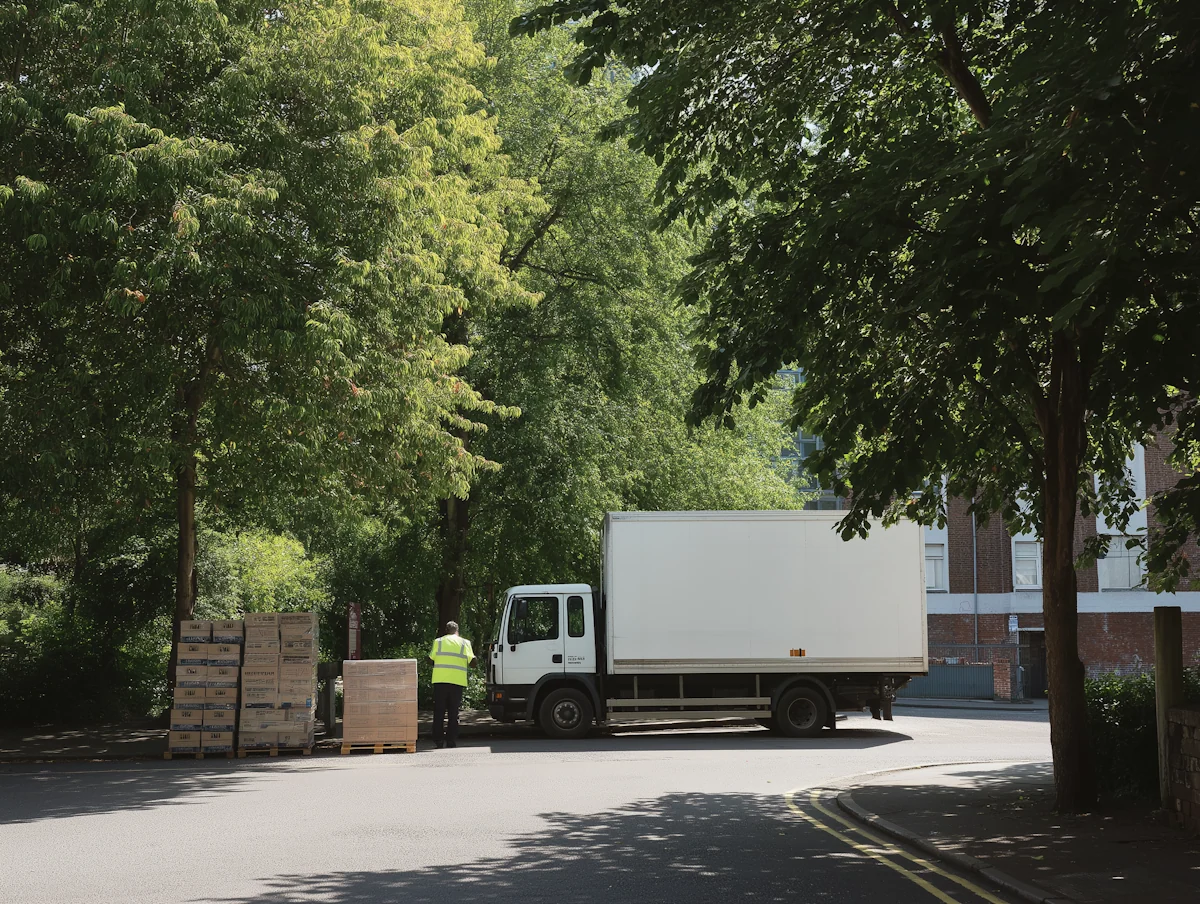
Delays don't just happen on the road
Rerouting starts too late
The detour search starts after you're stuck, and delays cascade.
No word to customers
Delay news reaches customers late, so time goes back into handling inquiries.
Handoffs lose the trail
Records break at each hub transfer, so lost parcels are hard to trace.
Routes that redraw when delay signals hit
It's designed to read traffic and delivery status in real time, redrawing routes and carrying the update all the way to the customer.
Routes that redraw when delay signals hit
It's designed to read traffic and delivery status in real time, redrawing routes and carrying the update all the way to the customer.
Ontology
ROUTE
86%
relation coverage
Data schema
Data schema
Data schema
DRIVER
follows
TRAFFIC
affects
CUSTOMER
notified
relation coverage
86%
DRIVER · follows
TRAFFIC · affects
CUSTOMER · notified
Churn starts long before the renewal date

Churn starts long before the renewal date
Absence signals surface late
Repeat absences show up in the month-end count, so the call comes after the student has decided.
Rooms fill unevenly
Empty rooms and over-capacity classes land in the same hour, so fewer classes fit the same space.
Make-ups and calls slip
Make-up slots and parent calls live in a teacher's memory, so follow-up changes every time.
Operations that raise the churn signal first
It's designed to connect attendance with progress and room assignment in one structure, raising churn signals early and carrying them through to make-up scheduling.
Operations that raise the churn signal first
It's designed to connect attendance with progress and room assignment in one structure, raising churn signals early and carrying them through to make-up scheduling.
Ontology
CLASS
87%
relation coverage
Data schema
Data schema
Data schema
ABSENCE
signals
ROOM
hosts
GUARDIAN
confirms
relation coverage
87%
ABSENCE · signals
ROOM · hosts
GUARDIAN · confirms
Thinking about bringing us in?
AI Hub is NEXTPAY's AI execution platform for offline industries. It captures operational data in the field, adds relationships and meaning through Ontology, and assembles agents that know your industry's context, so their decisions carry through to real operations. It isn't a fixed feature list. It's a structure each site uses to design and run AI around its own way of operating.
Most tools stop at recording and reporting. They tell you what happened. What to do next stays on you. AI Hub weaves your scattered data together so AI understands the context of your operation, and is designed to point to the next action, not just the numbers.
Yes. Most AI assumes your data is already organized. Offline operations rarely are. AI Hub puts collection devices where nothing is recorded, pulls from the systems you already run, and connects data your partners hold. You don't need to tidy anything up first.
AI Hub isn't built for one vertical. It's a structure that works across industries. The Ontology stays the same. Only the industry-specific judgment and agents get swapped. Moving into a new industry doesn't mean rebuilding from scratch.
Not everything, by design. Which decisions run automatically and which wait for a person's sign-off is something we design together around your site's conditions. The scope of automation stays in your hands.
Yes. Nothing gets replaced. AI Hub adds an operating layer on top of what you already run. Start in one place, prove it out, then expand.
With a diagnosis of your operation: what data is already accumulating, what systems you run, and which decisions keep passing through human hands. Then we decide together which layer to apply first. An expert who understands your field is with you from the design stage.

What we do
Turn complexity
into simple action
Better decisions from AI,
for everyone working in the field.
What we do
Turn complexity
into simple action
Better decisions from AI,
for everyone working in the field.



Make every call in
your workspace smarter
Every field runs differently.
Talk to our experts about
what your operation actually needs.